Calling an emergency locksmith or your property manager for an apartment lockout
Locked out of your apartment? Weighing your first call
Finding yourself locked out of your apartment is frustrating and often happens at the worst possible time. You might be carrying groceries, rushing to an appointment, or coming home late. The immediate instinct is to get back inside as quickly as possible. But who do you actually call first? Many tenants face a choice between contacting an emergency locksmith service or reaching out to their property manager or building superintendent. Each option has its own set of advantages and drawbacks, and the right choice often depends on the time of day, the type of lock, and your lease agreement.
Understanding the difference between these two routes can save you time, money, and unnecessary hassle. This article compares calling a professional locksmith versus contacting your property manager for an apartment lockout, so you can make an informed decision when you need it most.
When a property manager handles lockouts
In many apartment buildings, the property manager or on-site superintendent keeps a master key or access to a lockbox. If you are locked out during regular business hours, this is often the simplest solution. The manager can let you in without any special tools or fees. Some buildings even have a policy that the manager must handle all lockouts to ensure security and access verification. In those cases, they will ask for photo identification and proof of residence before opening the door.
The main advantage of going through the property manager is that it is usually free or covered by your rent. You do not have to pay a service call fee or worry about whether the locksmith is licensed. However, this option only works if the manager is available and willing to come to the door. After hours, on weekends, or during holidays, the manager may not answer their phone. Some buildings contract with a third-party answering service that takes a message, which means you could wait hours for a callback.
When an emergency locksmith makes sense
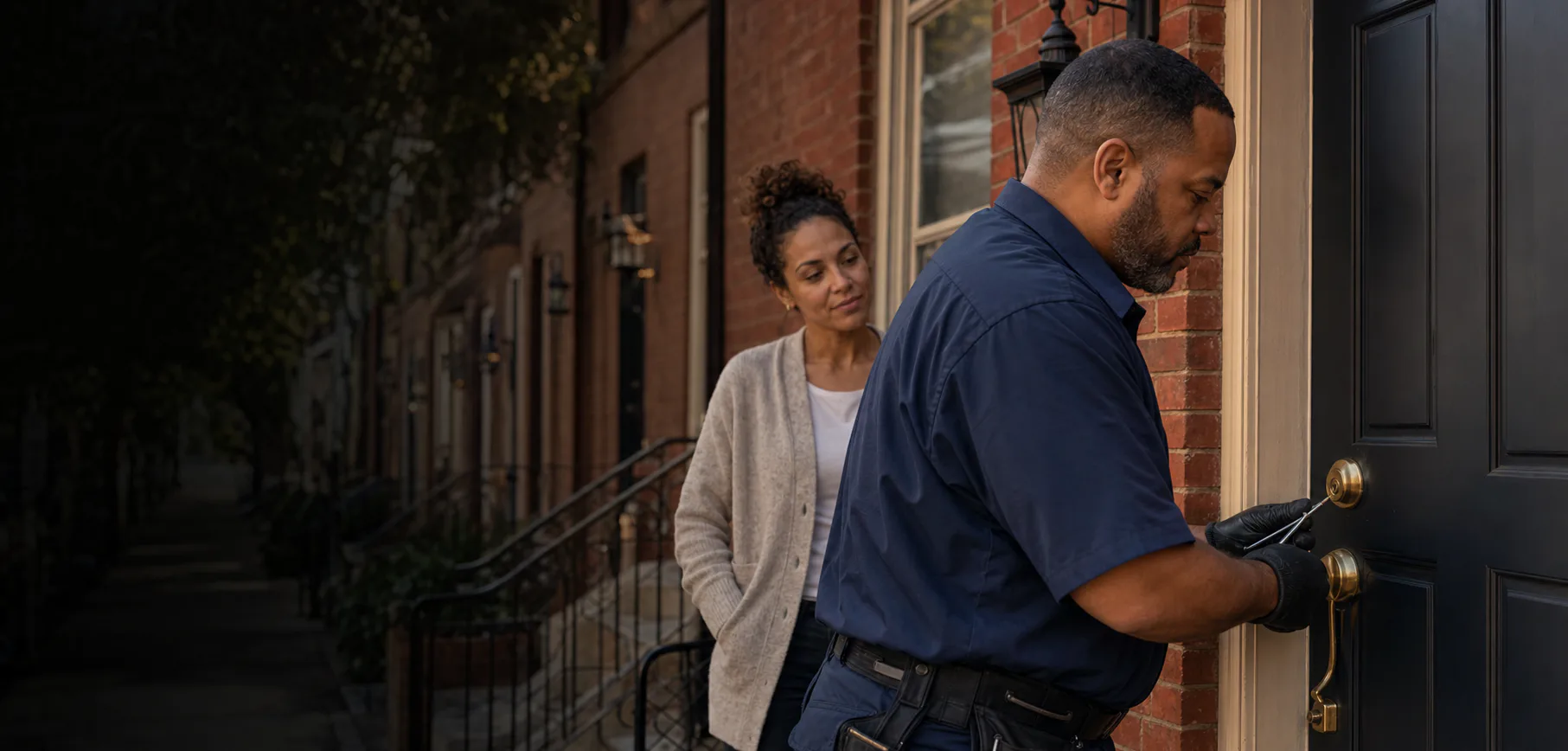
If you are locked out at night, on a weekend, or during a holiday, an emergency locksmith service is often the more reliable choice. These professionals work around the clock and typically arrive within a short time. They also handle situations where a property manager cannot help, such as a broken key stuck in the lock or a jammed deadbolt. A locksmith can pick the lock, replace a faulty door latch, or extract a broken key on the spot.
Another scenario where a locksmith is the better option is when you do not have a property manager at all. In smaller buildings or individually owned units, the landlord may live far away or be unreachable. In that case, calling a locksmith is your only realistic path back inside. Even when a property manager is available, a locksmith can often get you in faster because they are already mobile and dedicated to the job. They are also trained to handle various lock types without damaging the door or frame.
Access verification and security concerns
Both property managers and reputable locksmiths take access verification seriously. A property manager will typically ask for photo identification and proof of residence, such as a lease or utility bill, before using a master key. An emergency locksmith will also ask for identification and sometimes for a signed letter from the landlord if the property is rented. This process helps prevent unauthorized entry and protects your security.
If you are locked out of a friend's apartment or a shared space, the situation becomes more complicated. A locksmith may require the tenant's explicit permission or proof that you are authorized to be there. A property manager is unlikely to let anyone in without the tenant present. In such cases, it is best to contact the tenant directly and have them make the call.
Cost and response time
Cost is a major factor in deciding who to call. A property manager's help is typically included in your rent, so there is no additional charge. An emergency locksmith service comes with a fee that varies depending on the time of day, the complexity of the lock, and your location. While the cost is higher, you are paying for speed and availability. If you are in a hurry or it is late at night, the convenience of a locksmith often outweighs the expense.
Response time also differs. A property manager might be on-site but busy with maintenance, or they may need to drive from home. A locksmith dispatches a mobile service unit that is already on the road, so they can often arrive within minutes. For many people, fast help for home lockouts is the priority, and a locksmith delivers that reliably.
When the lock itself is the problem
Sometimes a lockout is not just about forgetting your keys. A broken key inside the lock, a jammed deadbolt, or a faulty door latch can prevent you from getting in even if you have a key. A property manager may not have the tools or expertise to handle these issues. They might only be able to use their master key, which will not work if the lock is damaged. In such cases, a locksmith with specialized tools is necessary. They can extract broken keys, repair or replace locks, and ensure the door functions properly again.
If the lock is old or worn, a property manager might need to schedule a replacement later, leaving you locked out in the meantime. A locksmith can often fix the problem immediately, restoring access and security in one visit.
What about building policies and lease terms
Your lease may have specific rules about who handles lockouts. Some buildings prohibit tenants from calling an outside locksmith without prior authorization, while others leave the choice up to you. It is worth checking your lease or asking the property manager about their policy before you find yourself locked out. If the building has a security protocol that requires the manager to be present, calling a locksmith first could create complications or void coverage. On the other hand, if the policy allows it, you are free to choose whichever option gets you inside fastest.
If you are unsure, a quick call to the property manager's emergency line can clarify the situation. Ask whether they can come within a reasonable time frame and whether they authorize you to call a locksmith if they cannot. This avoids confusion and ensures you are not penalized later.
Practical tips to avoid lockouts
While you cannot predict every lockout, a few habits can reduce the chance of needing fast help for home lockouts. Keep a spare key with a trusted neighbor or family member who lives nearby. Consider installing a keyless entry system, such as a smart lock, so you can enter with a code or smartphone. Always double-check that you have your keys before closing the door behind you. And if you frequently misplace your keys, a key finder device can save you time and frustration.
If you do get locked out, stay calm and assess the situation. Try to reach the property manager first if it is a reasonable hour. If they are unavailable or the lock is damaged, call an emergency locksmith. Both options are valid, but knowing which one to choose in advance makes the experience less stressful.
Making the right call for your situation
There is no single answer that works for every lockout. A property manager is ideal during regular hours and for standard lockouts where a master key will work. An emergency locksmith is better for after-hours, damaged locks, or when the manager is unreachable. Your decision should balance cost, speed, and the nature of the lock problem.
By understanding the pros and cons of each approach, you can handle a lockout with confidence. Whether you reach out to your property manager or dial a locksmith, the goal is the same: getting you back inside your apartment safely and as quickly as possible.